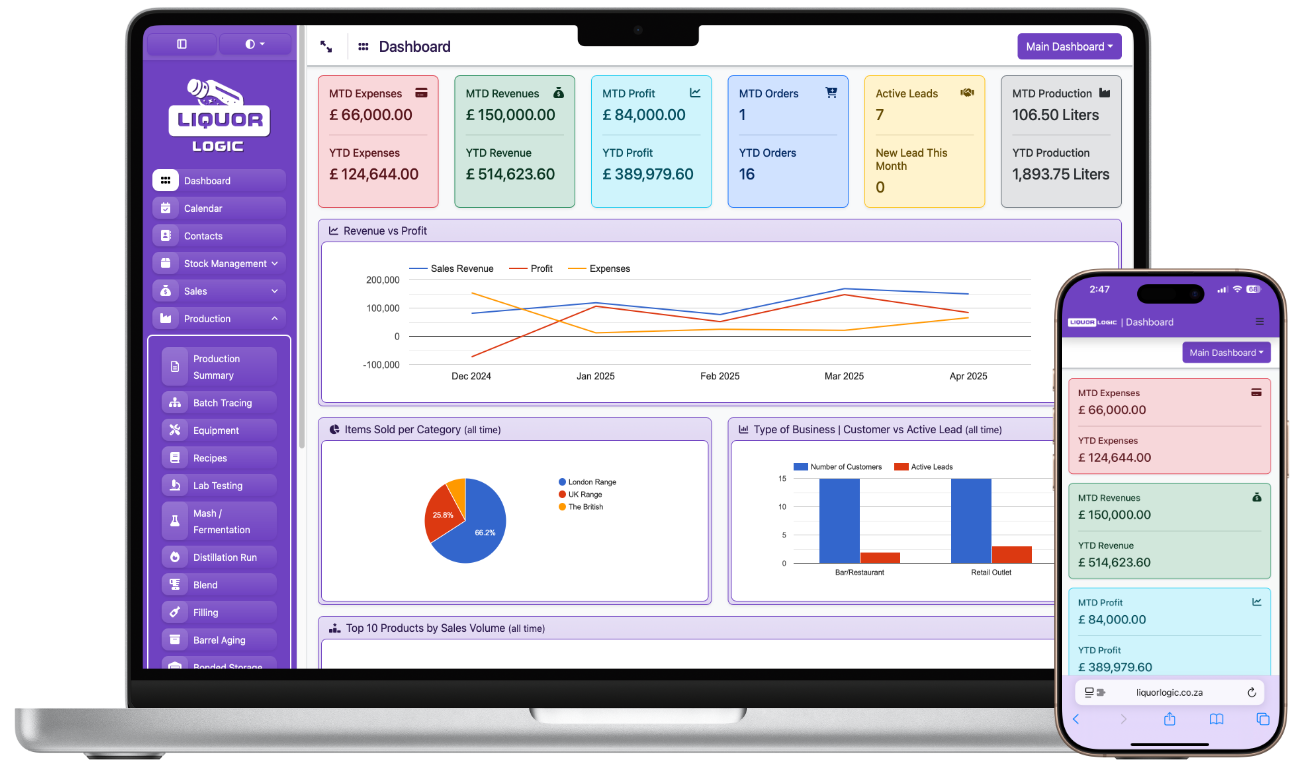
Most wineries and distilleries do not fail at digital transformation because the software is bad; they fail because they try to change everything at once, mid-harvest, with no agreed order of operations. This is a practical roadmap for producers who want the benefits, live stock numbers, honest batch costs, faster compliance, without betting a production season on a big-bang rollout.
Stage 0: Know What You Are Fixing
Before choosing tools, write down your five most expensive information failures. Typical candidates: stock counts that never match, batch costs known only at year-end, excise returns compiled from memory, sales happening against stock that does not exist, and recipes living in one person's head. Rank them by cost. This list, not a feature brochure, is your selection criteria; our guide to evaluating producer software goes deeper on running that process.
Stage 1: Digitise the Records That Anchor Everything
Products, recipes, suppliers, customers, and current stock, captured once, correctly, in one system. This stage is unglamorous data work, and it is worth doing carefully: every later stage inherits its quality. Producers with maturing stock should capture cask and batch identities here too, since age statements and recipe consistency both depend on batch-level history.
Stage 2: Connect Production to Inventory
This is the transformation's engine room. When a batch is brewed, distilled, or blended, the system should consume raw materials from stock automatically, track the product through fermentation, distillation, maturation, and packaging, and record losses at each stage. From this single connection you get live raw material positions, honest yields, per-batch costs, and full lifecycle traceability without extra admin. Excise reporting stops being a monthly archaeology project because bonded movements and losses are already recorded.
Stage 3: Connect Sales Channels to the Same Stock
Now point every channel at that one stock ledger: the tasting room POS, trade orders through a B2B portal like Order Hub, and invoicing. The payoff is immediate and visible to customers: no more selling wine that is not in the cellar, no more phone-and-spreadsheet order capture, and every sale enriching customer history for CRM and repeat business.
Stage 4: Let the Data Work
With operations flowing through one platform, the analytics that used to require a consultant become standing reports: margin per SKU and channel, yield trends per recipe, slow-moving stock, demand forecasts driving purchase orders. This is where the transformation pays for itself repeatedly, and it only works because Stages 1 to 3 made the data trustworthy.
What Changes in Practice
- Stocktakes shrink from a shutdown weekend to routine cycle counts against live numbers.
- Batch costing is current, so pricing decisions and tenders stand on real numbers.
- Compliance accelerates: excise and audit requests become report generation. See our South African compliance guide for what auditors ask.
- Handovers survive: when a cellarmaster or bookkeeper leaves, the process knowledge stays in the system.
Common Pitfalls
Three failure modes account for most stalled rollouts: migrating bad data instead of cleaning it first, running the old spreadsheets "just in case" so nobody commits to the system, and skipping staff training so workarounds harden into practice. Each is avoidable, and all three are cheaper to prevent than to unwind.
Digital Transformation Questions Producers Ask
How long does implementation actually take?
For a small to mid-size producer, Stages 1 and 2 typically land within a few weeks each, with sales channels following. Cloud platforms have removed the old six-month ERP timelines; the pace is set mostly by how quickly your master data can be cleaned.
Should a very small craft producer bother?
Small producers arguably benefit most, because one system replaces the owner doing evening admin across five spreadsheets. The key is choosing a platform priced and scoped for producers rather than a generic ERP.
What is the single biggest mistake before adopting software?
Buying features instead of fixing failures. The producers happiest with their systems chose against a ranked list of their own information problems, ran a focused pilot, and expanded from there.
Conclusion
Digital transformation for a winery or distillery is a sequence, not an event: records, then production and inventory, then sales, then analytics. Liquor Logic was built to carry producers through that whole sequence on one platform, priced for craft operations; see pricing or book a demo to map the roadmap onto your business.