Sustainability talk in the drinks industry is easy to dismiss as label copy, until the water restrictions arrive, the glass price rises again, or a retail buyer asks for your environmental numbers before listing you. For craft distilleries, breweries, wineries, and cideries in 2025, sustainability has become a set of operational pressures with hard costs attached. Here is where those pressures bite, and what producers are actually doing about them.
1. Water: The Elephant in the Cellar
Alcohol production is water-intensive: cleaning, cooling, dilution, and irrigation for wine all multiply litres consumed per litre sold. South African producers learned this the hard way through Cape Town's Day Zero crisis, and municipal water in production regions has only become more expensive and less certain since. The practical responses are measurement first, closed-loop cooling, CIP optimisation, and rainwater capture, and the producers making progress are the ones who can state their litres-per-litre ratio because they track it per batch rather than guessing annually.
2. Barrels and Wood Sourcing
Oak is a slow, finite resource, and cooperage prices reflect it. Reuse strategies, shave-and-retoast programmes, and secondary markets for once-used casks are now standard practice, but they only work with per-cask records: fill history, previous contents, and condition. A barrel programme managed on memory quietly loses both money and flavour consistency.
3. Glass, Labels, and Packaging Waste
Glass is typically the largest single item in a producer's carbon and cost footprint, and South African glass pricing has climbed steadily. Lightweighting bottles, rationalising SKU packaging variants, and designing labels for recyclability all reduce both footprint and spend. The enabling discipline is inventory accuracy: overordered custom packaging that ends up scrapped is pure waste, financially and environmentally, and it is an inventory management failure before it is a sustainability one.
4. Fermentation By-Products and Energy
Spent grain to livestock farmers, pomace to compost or distillation, CO2 capture where scale allows: by-product partnerships turn disposal costs into relationships and sometimes revenue. On energy, South African producers have led adoption of solar and battery storage for the bluntest of reasons, load-shedding resilience, with emissions reduction as the bonus; our piece on load-shedding and distilleries covers the operational side.
5. Regulation and Certification Pressure
Export markets and large retailers increasingly ask for environmental data as a condition of listing: energy use, water intensity, packaging recyclability. Certifications carry weight, but even without formal certification, producers need auditable numbers, and auditable means recorded systematically, not reconstructed for the questionnaire. The record-keeping muscle producers build for excise and production compliance is the same muscle sustainability reporting uses.
6. Greenwashing vs. Authenticity
Consumers, and especially trade buyers, have become fluent in spotting vague claims. "Sustainably crafted" with nothing behind it now does more harm than saying nothing. The credible position is narrower and evidenced: state what you measure, publish the number, and show the trend. That standard is only reachable if your production system captures inputs, yields, and waste as a side effect of normal work.
Common Sustainability Questions from Craft Producers
How do distilleries reduce water consumption?
Measure per-batch usage first, then attack the biggest lines: closed-loop condenser cooling, optimised clean-in-place cycles, and reuse of final-rinse water. Producers routinely cut consumption significantly within a year of simply measuring it per batch.
Is sustainable packaging worth the cost for a small producer?
Lightweight glass usually pays for itself through purchase price and freight, and packaging rationalisation, fewer variants, better forecasting, saves money outright. Premium eco-materials are a brand decision; the operational wins above are simply good business.
What should a producer measure first?
Four numbers: water per litre produced, energy per batch, packaging waste percentage, and by-product volumes with their destinations. All four fall out of a production system that records batches and stock movements properly.
Conclusion: Sustainability Is Becoming a Barrier to Entry
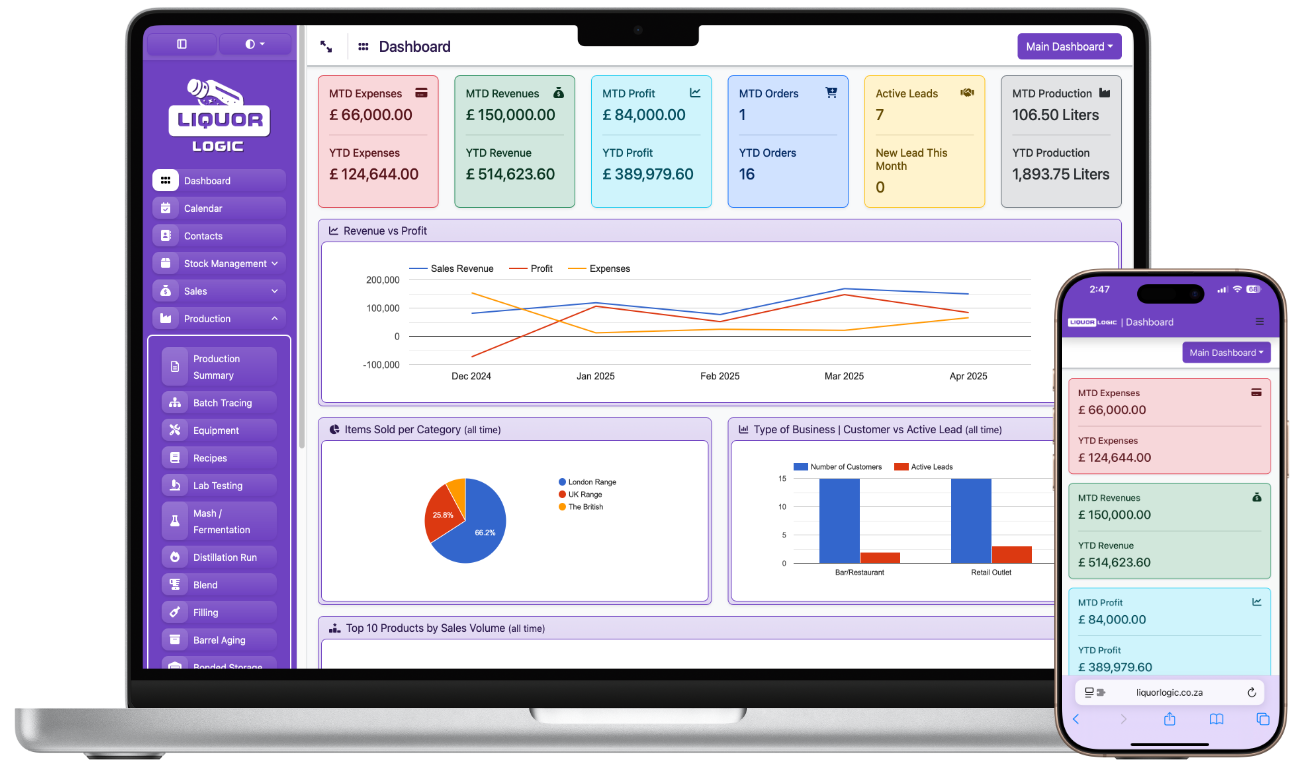
The through-line in every pressure above is measurement: you cannot manage, price, or credibly market what you do not track. Liquor Logic gives producers the per-batch production, inventory, and waste records that turn sustainability from a questionnaire panic into a report, on the same platform that runs the rest of the operation. Book a demo to see it against your own numbers.